Golden Ales : Introduction
Welcome to the 23rd edition of “Source of Styles” – the golden ale style beer. The style has a variety of other names : sometimes called Golden Bitter, Summer Ale, or Blond Ale depending on the region, it is a relatively modern beer style, born out of both tradition and innovation. In reality, there’s very little, if any, difference between the names – think of it as marketing for the beers to make them stand out from one another. This style of beer though is very different from the Belgian Strong golden ale – an entry for another time I think.
Table of Contents
Golden Ales : A Brief History
As mentioned, this style is a relatively newer style of beer – so recent in fact that the “oldest” documented golden ale comes from the late 1970s, in the UK. For much of the history of beer drinking, pubs in the UK were dominated by bitters, milds, and dark ales – all of them being darker in colour, along the line of copper to brown to black. However, during the late 1960s and early 1970s, pale lagers like Carlsberg, Heineken, and Stella Artois were sweeping across the UK, especially among younger drinkers. Lagers looked cleaner, lighter, and more modern than their ale counterparts, making them more enticing to drink.
Traditional brewers saw they were losing drinkers and needed to create an ale that could compete visually and stylistically with lager, though using an ale base. The colour of the darker beers was changed using extra pale malts (sometimes lager malts) and careful brewing to produce a straw-to-golden colored beer, which at that time was unusual for ale.
What is credited as the first Golden Ale is Exmoor Gold, introduced into the market in 1979. It’s brewed by Exmoor Ales, then called Golden Hill Brewery, Somerset, and was based around a simple recipe : pale malt base, clean fermentation, and English hops in the form of Styrian Goldings – a version of Fuggle. The beer is still brewed today and is still marketed as “Britain’s Original Golden Ale.”
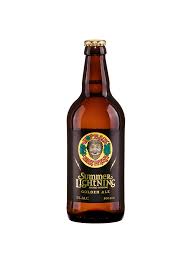
However, it wasn’t until the mid 1980s that the style became truly established with Hop Back Summer Lightning, brewed by Hop Back Brewery, and can still be found to this day. The beer took the original idea and made it brighter in colour, bolder in taste, and crisper in body. By the late 1980s, other regional breweries started brewing pale, hoppy ales marketed as “golden” or “summer” beers.
During the 1990s and 2000s, other breweries soon followed suit; all making their own version this beer – even Guinness, maker of the famous stout, have their own version available in the UK. The marketing teams also got involved with the promotion of these beers; marketing them as Summer refreshers, gateway beers for lager drinkers to get into ales; and modern-looking ales with a “lighter” image instead of the “old man” image from the middle of the 20th century.
A few years later, American craft beer breweries got involved, using the British version of the beer as a base, instead of the Belgian one. An overlap of golden ales began with session pale ales, using American hops, for example, Amarillo, Cascade, and Citra for grapefruit, pine, and tropical fruit notes. Yet the idea of this style of beer remains : lighter, lower-ABV, and more balanced than American pale ales.
Golden Ales : How They Are Made
Golden ales use a deliberately simple recipe that emphasises clarity, pale colour, and refreshing hop character. The malt (the base) is usually an extra pale malt or lager malt which gives the beer its straw-golden appearance. Sometimes a small amount of wheat malt is added for body and head retention. However, very little (or no) darker crystal malt is used (unlike bitters).
For hops, traditionally English hops, such as Goldings, Fuggles, Challenger, Styrian Goldings are used. Modern versions often use American, for example Citra, Mosaic, or Simcoe, or New World hops, such as Galaxy or Nelson Sauvin, for citrus, tropical, and floral notes. With all of this though, it can’t be understated that balance is important: bitterness should be noticeable but not harsh.
As the malts and hops are the stars of this show, a clean, well-attenuating English ale yeast is used to dry out the body and reduce the chance of yeast flavours creeping into the beer. Some brewers even use neutral American yeast strains for crispness, letting the hops shine through.
Golden Ales : Appearance, Aroma, and Flavour
Here’s the guidelines from the BJCP for what makes golden ale, beers that are worth looking for.
Appearance : Straw to golden in color. Good to brilliant clarity. Low to moderate white head. A low head is acceptable when carbonation is also low.
Aroma : Hop aroma is moderately low to moderately high, and can use any variety of hops – floral, herbal, or earthy English hops and citrusy American hops are most common. Frequently a single hop varietal will be showcased. Little to no malt aroma; no caramel. Medium-low to low fruity aroma from the hops rather than esters. Little to no diacetyl.
Flavour : Medium to medium-high bitterness. Hop flavour is moderate to moderately high of any hop variety, although citrus flavours are increasingly common. Medium-low to low malt character, generally bready with perhaps a little biscuity flavour. Caramel flavours are typically absent. Little to no diacetyl. Hop bitterness and flavour should be pronounced. Moderately-low to low esters. Medium-dry to dry finish. Bitterness increases with alcohol level, but is always balanced.
Japanese Golden Ales We Recommend
Japan doesn’t have an abundance of beers in this style. However, they ones that you can find tend to be crisp, light-bodied beers that balance subtle malt sweetness with gentle hop bitterness. Often brewed with rice or local ingredients, they offer clean, refreshing flavours suited to Japan’s cuisine. Here are some that we’ve enjoyed in the past, and will happily recommend to anyone trying to find some good examples in Japan.
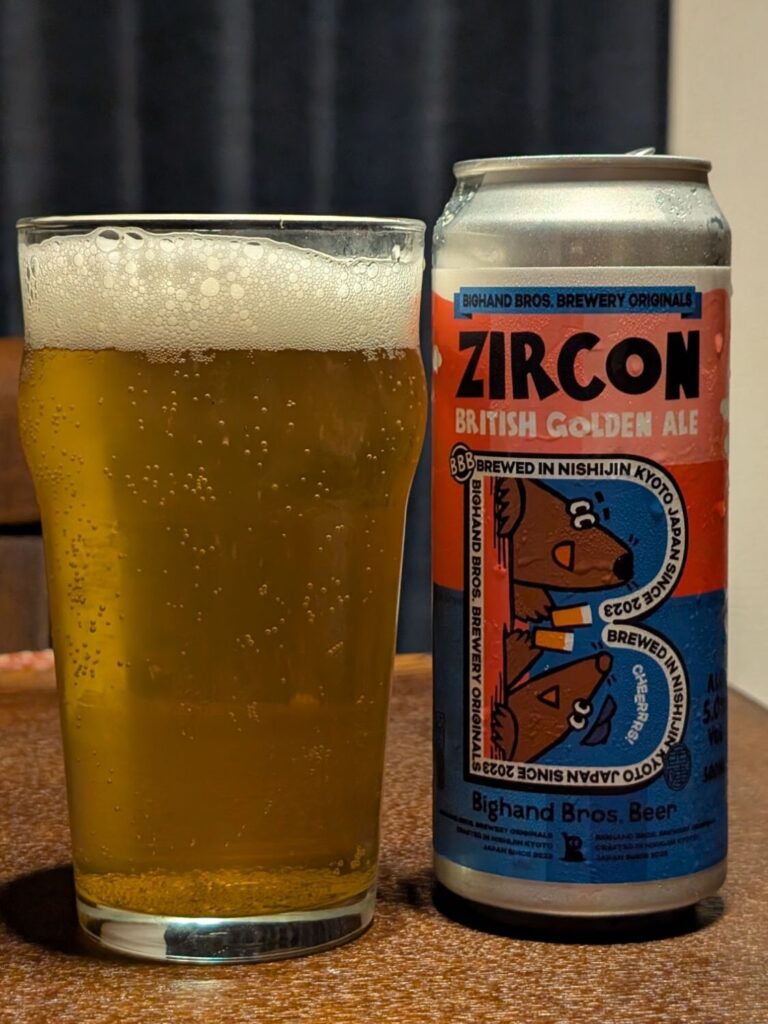
Bighand Bros Zircon
The Bottom Line : Bighand Bros Zircon is from Bighand Bros Beer, based in Kyoto, Japan. It’s part of their regular lineup and is available in both cans and on tap. It’s unknown though what hops went into the making of it, but we can assume that they’re British.
Notes of citrus – lemon more so than anything else – as Bighand Bros Zircon warms up, with a lingering hop aftertaste. On the whole, Bighand Bros Zircon is a delicious beer that I will definitely be having again – if I can find it.
Review : Bighand Bros Zircon
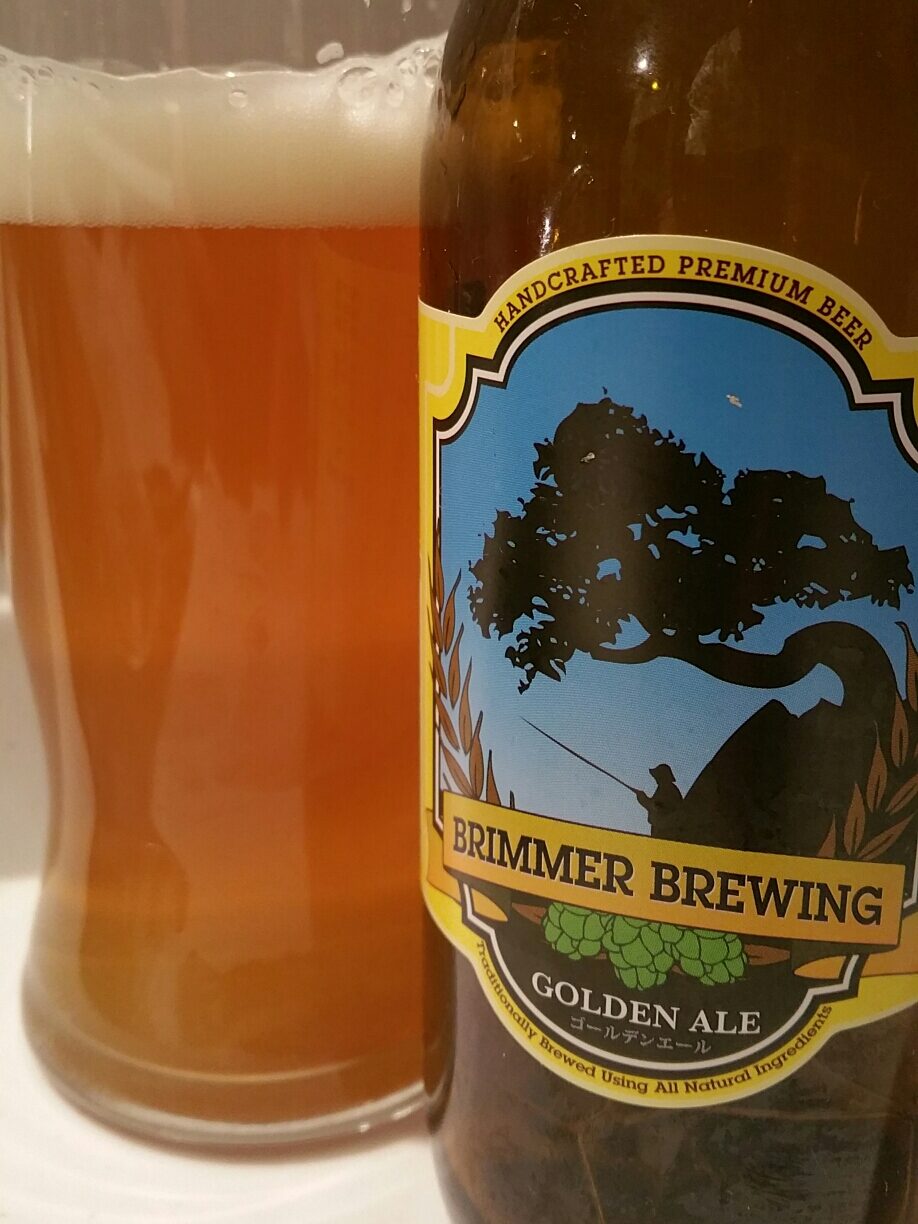
Brimmer Golden Ale
The Bottom Line : It was easy to see why Brimmer Golden Ale is their session beer though as it’s so easy drinking that you could easily chat away without realising how many of these you have put away.
The flavour is stronger than your regular golden ale, with the hops generating citrus and orange tastes that become bitter as the beer moves along. The dryness also lends itself to quick-drinking because as soon as you’ve had a sip, you want another.
Review : Brimmer Golden Ale
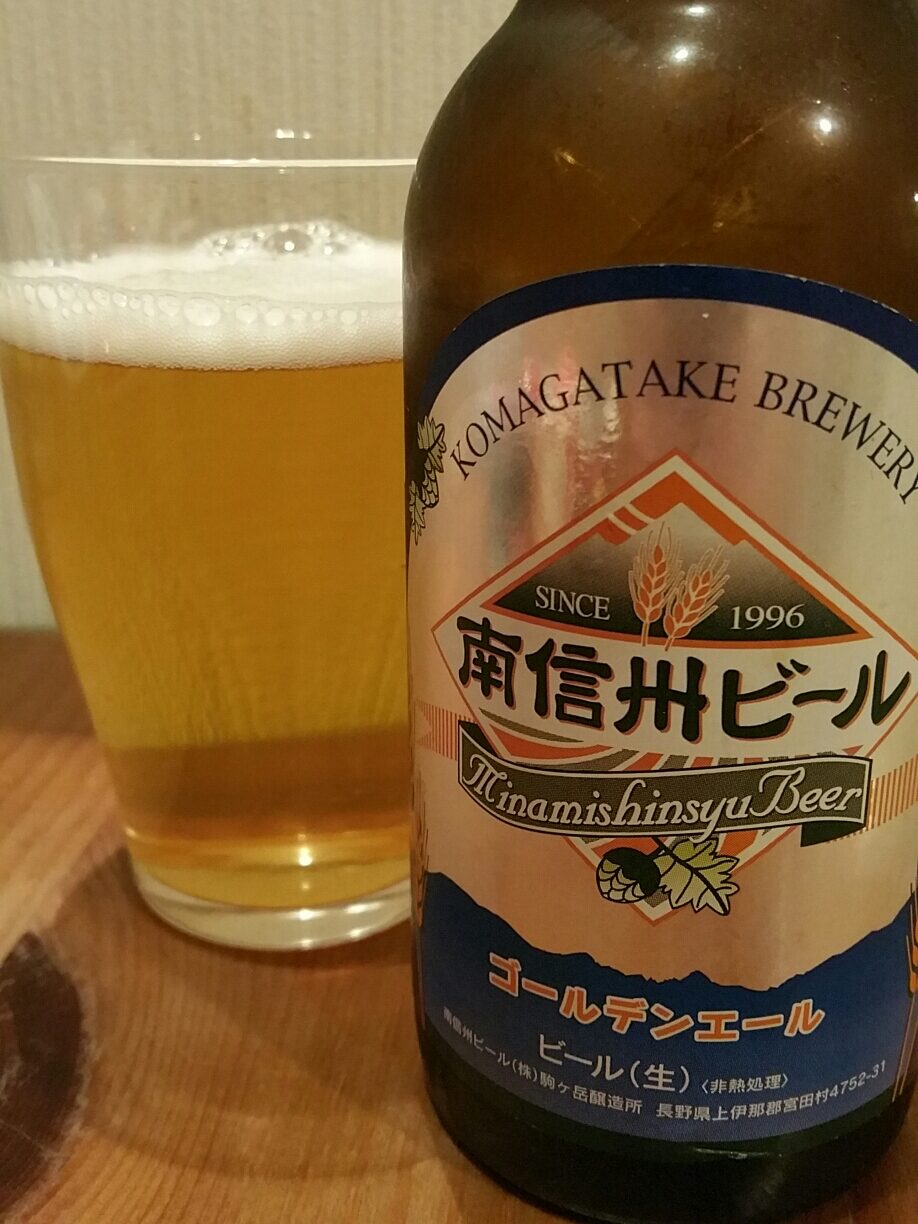
Minamishinshu Golden Ale
The Bottom Line : Minamishinshu Golden Ale has also won two awards Japan beer competitions, gold in 2000 and silver in 2003 and also Asia’s Best Golden Pale Beer in 2013 at the World Beer Awards.
The citrus flavour is present so if you’re looking for a beer that presents hops well, you’re in luck with this beer.
Review : Minamishinshu Golden Ale
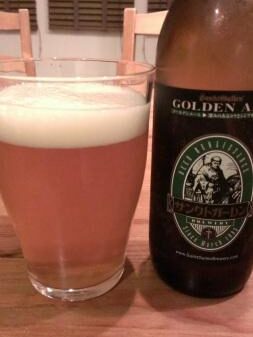
Sankt Gallen Golden Ale
The Bottom Line : One of Sankt Gallen’s regular range, the Sankt Gallen Golden Ale has won several awards; Bronze medal at the Japan and Asia beer cup in 2006, and Gold medal in 2005 at the International Beer Awards with the silver in 2007.
It’s a light beer with very little bitterness that is usually associated with American pale ales. The beer starts off with a sweet and fruity flavour, with hoppy aftertaste that gets stronger the more you drink.
Review : Sankt Gallen Golden Ale
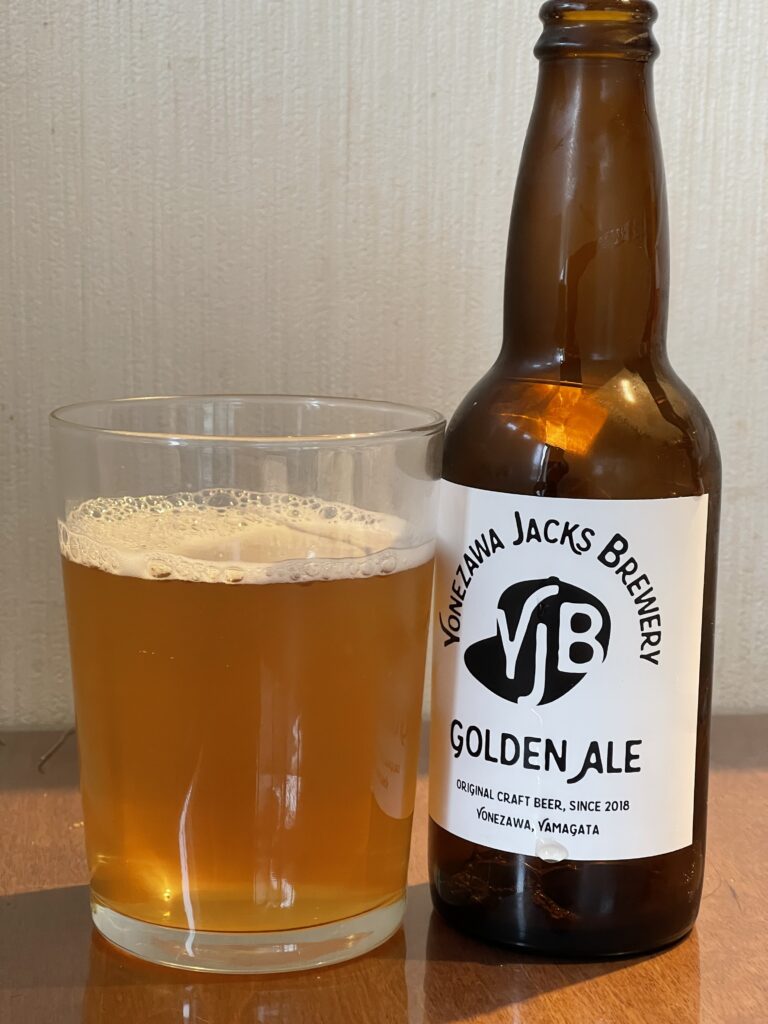
Yonezawa Jacks Golden Ale
The Bottom Line : It’s part of their regular lineup and can be found in both cans and on draught. Yonezawa Jacks Golden Ale is brewed using Cascade and Centennial hops.
Yonezawa Jacks Golden Ale is a example of this style of beer – it’s not going to rock your world, but it will fill a hole.
Review : Yonezawa Jacks Golden Ale
Imported Golden Ales We Recommend
Let’s be honest – if you’re going to try a style of beer, then it’s also worth trying out some of the overseas beers. Check out the label on the bottle to see when the beer was bottled, and also ask how the beer was imported. Was it in a cold chain from start to finish? Was the beer stored in a chilled environment in store? If the shop assistant can’t, or doesn’t know the answer, then give it a miss.
