Scotch Ale : Introduction
Welcome back for another entry into our Source of Styles, and now we’re at 22 – and we’re looking at the Scotch Ale. But that hasn’t stopped us now, and why should it? With this entry, we’re heading to north of the border – Scotland – where, like the rest of the island Scotland is located on – England and Wales – the drinking age is a mere footnote in legality. The legal drinking age in the UK – which is made up of Scotland, England, Wales, and Northern Ireland – is five years old, as long as that person is drinking on private premises.
In this entry, we’re looking at Scotch Ales – a style that really hasn’t seen much notoriety or fame because it’s a malt forward beer, so no doubt IPA drinkers will be put off by that. But when the second biggest ingredient in making beer is malt, with the first being water, then you should be tasting some of that malt, and Scotch Ales do exactly that.
Scotch Ale : A Brief History
Scotland has always had a long tradition of brewing beer, dating back to the Metal Age. There is archaeological evidence of traces of beer on a piece of pottery discovered in Balfarg, in the Fife region of Scotland. These fragments are estimated to be between 4,000 and 6,000 years old.
Medieval monasteries around the areas of Glasgow and Edinburgh (the latter of which was nicknamed the Charmed Circle due to the region’s much-revered underground springs of soft water), were at the centre of the brewing revolution in Scotland
The style known as Scotch ales originated in Edinburgh, Scotland, during the 1800s and they focus on a more readily available ingredient that is malt. The recipe uses a rich mixture of pale and dark malts to give it its signature color and desired sugar content. The sugar is important during fermentation to produce the ale’s high alcohol by volume. Traditional scotch ales ferment at cool temperatures, as the lagering technique generally suited the cold Scottish climate.
Scotch Ales have plenty of names given to them, but historically, the term “shilling” was adorned on those beers. ‘Shilling’ beer is denoted by the /- symbol preceded by a number, usually 60, 70, 80 or 90. The higher the number, the higher the ABV, and therefore the higher the tax historically levied on the beers post-1880.
In the 20th Century, the shilling system petered out and was replaced by the terms ‘Light’, ‘Heavy’ and ‘Export’. The 90/- is commonly known as the ‘Wee Heavy’, since it tends to be stronger in ABV, taste, colour and body, and tends to be what people associate with the term ‘Scotch Ale’.
Scotch Ale : How They Are Made
The making of a Scotch ale heavily towards malt, with a minimal amount of hops being used. The base malt is a pale ale malt with varying amounts of pale caramel malt and unmalted roasted barley added to the mash. What differentiates them even more is the yeast strain and, on occasion, the fermentation temperature. Scotch and Scottish ales use their own yeast strain and can ferment their beers slightly cooler than ales such as IPAs and Pale Ales – around 16c or so (the typical ale fermentation temperatures of 16 – 21c ). This can make the beer less estery (fruity) and feel cleaner on the palate. These beers do still have fruity flavors but they mostly come from the malt.
In terms of hops, the earthier the better – American hops, which are more citrus and tropical than those found in the UK – are not used.
Scotch Ale : Appearance, Aroma, and Flavour
Scotch Ales come in three different levels, but we’re going with what is known as Wee Heavy.
Appearance : Light copper to dark brown color, often with deep ruby highlights. Clear. Usually has a large tan head, which may not persist. Legs may be evident in stronger versions.
Aroma : Strong bready-toasty malt, with a high caramel and toffee aspect. A wide range of supportive caramelized sugar and toasty bread type aromas are possible (toasted breadcrumbs, ladyfingers, English biscuits, graham crackers, nougat, butterscotch, etc.). Faint hint of roast is sometimes noted. Low to moderate dark or dried fruit esters and alcohol. Very low earthy, floral, orange-citrus, or spicy hops optional.
Flavour : Rich, bready-toasty malt that is often full and sweet on the palate with caramel and toffee flavors, but balanced by alcohol and a hint of grainy roast in the finish. The malt often has caramelized sugar and toasty flavors of the same type as described in the aroma. Medium to low alcohol and esters (plums, raisins, dried fruit, etc.). Bitterness low in the balance, giving a sweet to medium-dry finish. Medium-low hop flavor optional, with similar descriptors as the aroma.
Japanese Scotch Ales We Recommend
Baird Yabai Yabai Strong Scotch Ale
The Bottom Line : Yabai Yabai Strong Scotch Ale is a great example of a scotch ale done well. If you can find it, buy it and appreciate it.
Review : https://beertengoku.com/2014/12/09/baird-yabai-yabai-strong-scotch-ale/

Locobeer Wee Heavy
The Bottom Line : Locobeer Wee Heavy is a really good example of a scotch ale but make sure you share the bottle with someone if you want to lessen the sweet kick and share the cost.
Review : https://beertengoku.com/2017/10/23/locobeer-wee-heavy-by-locobeer/

Nara Brewing Nothing Special
The Bottom Line : Simply a fantastic beer – I want more of this.
Review : https://beertengoku.com/2024/04/09/nara-brewing-nothing-special/

Nasu Kogen Scottish Ale
The Bottom Line : If you’re a fan of sweet beer, by which I mean malt-heavy beers, then Nasu Kogen Scottish Ale is the beer you are looking for.
Review : https://beertengoku.com/2016/08/31/nasu-kogen-scottish-ale/

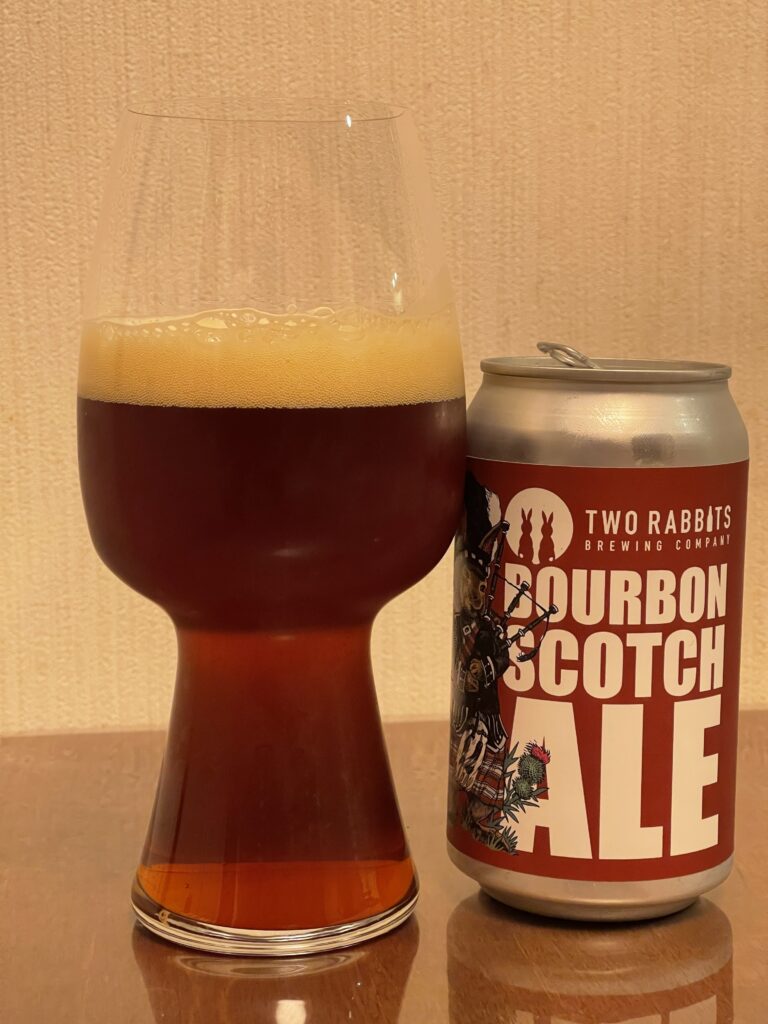
Two Rabbits Bourbon Scotch Ale
The Bottom Line : What are you waiting for? Go buy it! And if Two Rabbits are reading? Then brew it again!
Review : https://beertengoku.com/2022/04/03/two-rabbits-bourbon-scotch-ale-by-two-rabbits-brewing-company/
Imported Scotch Ales We Recommend
Let’s be honest – if you’re going to try a style of beer, then it’s also worth trying out some of the overseas beers. Check out the label on the bottle to see when the beer was bottled, and also ask how the beer was imported. Was it in a cold chain from start to finish? Was the beer stored in a chilled environment in store? If the shop assistant can’t, or doesn’t know the answer, then give it a miss.
- AleSmith Wee Heavy Scotch Ale
- Belhaven Wee Heavy 90
- Black Isle Organic Export Scotch Ale
- Founders Backwoods Bastard
- Tennants Super T
- Traquair Vintage Ale
